All of this sh*t to wash, nothing to wear.
For the past few years I’ve been playing Stylist with my sister-in-law, Tania. Actually, she has been entertaining my delusions by letting me advise her

Growing up, I was my mother’s greatest test of patience. She often reminds me of how I used to trail behind her, reporting on every observation I made – but most exasperatingly, bombarding her with questions in my need to know the why behind everything.
Why is the cat black? Is a zebra a white horse with black stripes, or a black horse with white stripes, and why? Why do people die? Why are there seven days in a week, and why did she choose the name she gave me, instead of any other name?
Not only did it torment her, but it also drained her energy as she scrambled for simple explanations for things that were too advanced for my understanding. She also struggled to come up with creative ways to tell me that she simply didn’t know – because I wouldn’t take ‘I don’t know’ for an answer.
I’ve moved on to the big leagues, though – now, instead of tormenting my mother with my whys, I get to torment myself.
One of my most recent fixations has to do with fashion history, psychology, and politics. It doesn’t take a particularly skilled observer to note that there are certain aesthetic elements to the current sociopolitical climate, and I’m set on discovering why certain aesthetic elements (fashion choices) are usually always present in times of significant historical movements, and whether they can actually play an active role in shifting mindsets.
We often hear the phrase “fashion is political” – but exactly how so? And most importantly, can it it influence someone enough to radicalize them?
Fashion as a steady companion to revolution
Historically, fashion has been an invaluable political tool: A visual aid for a rebellious cause, a display of support for a regime, or a way to humiliate and oppress a population. Fashion is the mechanism through which we not only express taste, personality and preference, but also dissent, group associations, and ideologies. We use fashion to reinforce (to ourselves, and to the world) our sense of belonging, and when our community is threatened, we tend to fight for our ideals while proudly sporting the elements that make our community stand out.
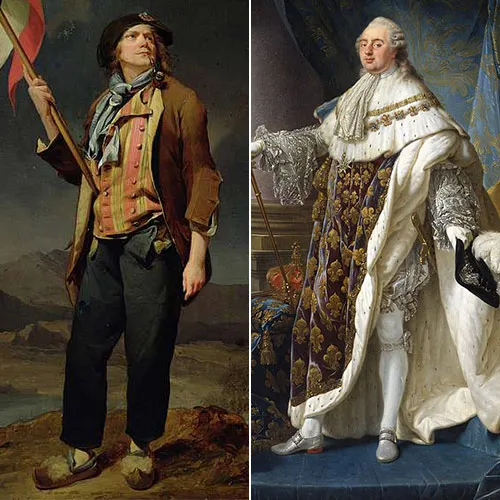
During the French Revolution, for example, revolutionaries opted for a style that would contrast with that of the monarchy – both as an act of dissent and as a way to show pride in their social status. One notable example was by wearing long pants, instead of the knee-length “culottes” used by kings and nobility. The sans-culottes (which directly translates to ‘without culottes’) were one of the most prominent revolutionary groups.
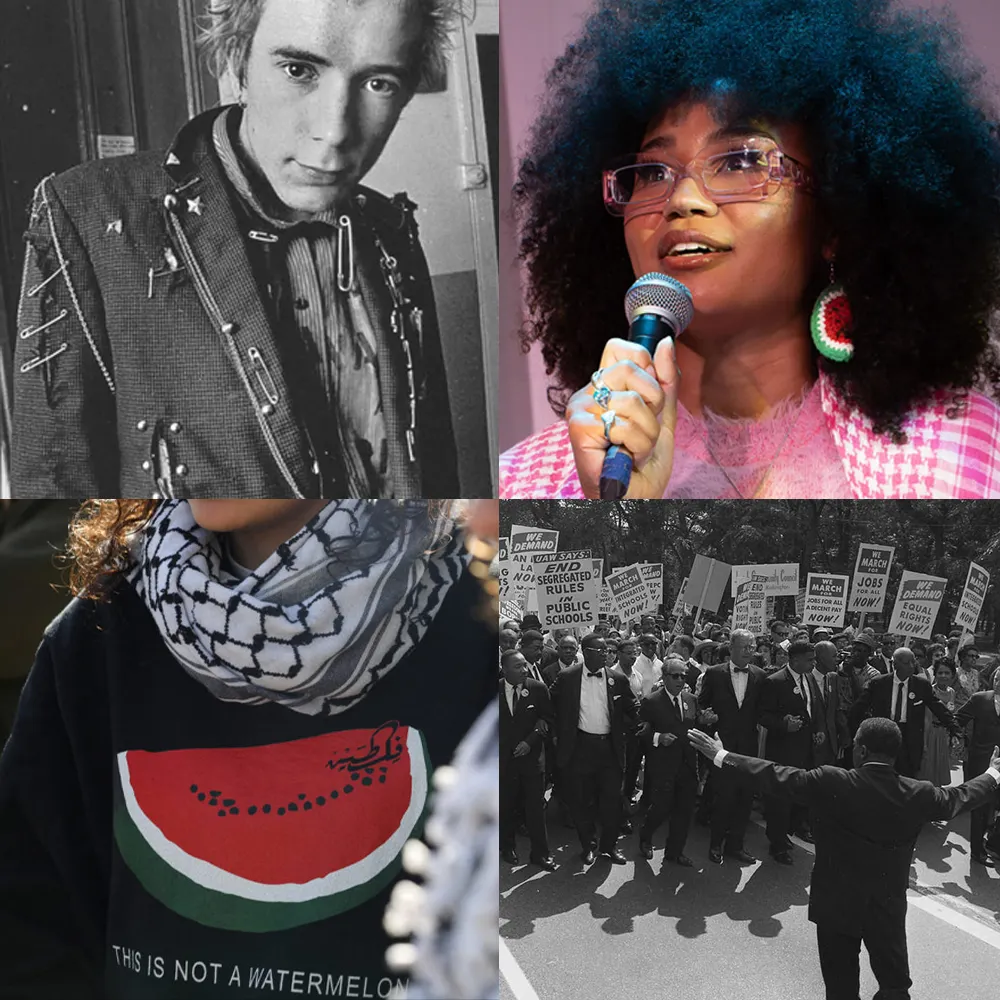
A few more recent examples of fashion in politics are the use of the safety pin in the 70s and 80s, the ‘Sunday Best’ outfits during the Civil Rights Movement in the U.S., and the watermelon imagery in support of the Palestinian resistance. The safety pin was used in punk subculture in England to hold destroyed garments together, emphasizing anti-establishment and anti-status quo sentiment. During the Civil Rights movement in the United States, Black activists often wore ‘Sunday Best’ – meaning dress suits and neatly pressed dresses, gloves and hats to demand dignity and respect, and counter the derogatory imagery that white supremacists created of them. Most recently, watermelon imagery shows support for Palestine – often used in clothing, as accessories, or emojis (although not directly related to fashion) in online spaces with pro-Palestinian sentiment.
Fashion as a steady companion to systems of oppression
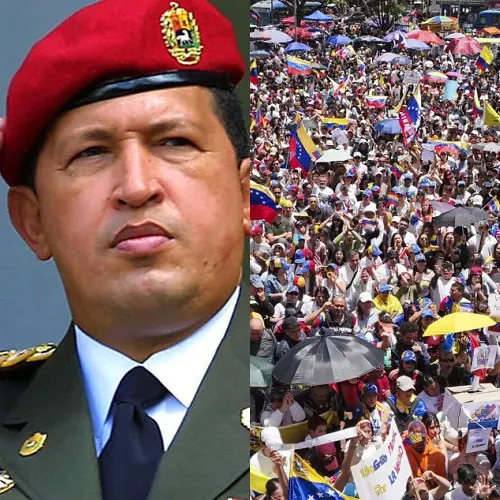
In the late 1990s, Venezuela’s apparent-revolutionary-leader-turned-dictator, Hugo Chavez, donned a red military beret that became a symbol for his movement and his supporters. While his initial reception was positive in the country, the unfortunate future and crisis ahead turned many Venezuelans completely against the regime, and naturally, towards a rejection of the color red because of everything it represented. To this day, many Venezuelans still feel apprehension towards wearing the color, even when abroad.
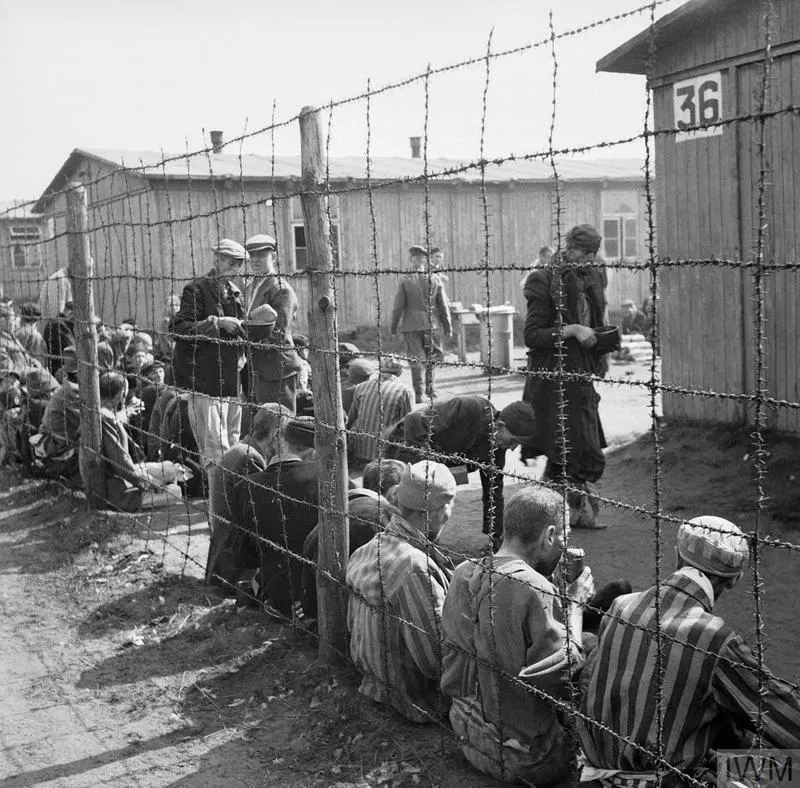
Clothing can not only be used to create an in-group, but it can also be used to strip humans of their identity in an attempt to humiliate them and break morale. Perhaps one of the most despicable uses of clothing to dehumanize marginalized groups is the use of the striped uniforms and colored badges in concentration camps during nazi Germany.
Enclothed Cognition
One of the most fascinating pieces of fashion psychology research (at least to me) is that of Enclothed Cognition performed by Northwestern University.
You’re welcome to read this research yourself, and perhaps answer your own whys – but let me give you the gist of it.
Researchers asked participants to perform tasks of selective attention. One group was wearing a doctor’s lab coat, and another group was wearing their own clothes. The group with the doctor’s coat performed better than the group without. Then, another group was told that the lab coat was a painter’s coat, and the participants did not perform significantly better when they were told it was a painter’s coat.
This research suggests that “clothes can have profound and systematic psychological and behavioral consequences for their wearers” – but more specifically, when there is a specific symbolic meaning behind the clothes. This would explain why participants performed better when they thought it was a doctor’s coat than a painter’s coat or in their own clothes – perhaps doctors are seen as more careful, as having more attention to detail, or being more cold-headed.
Researchers conclude with the following quote:
“Although the saying goes that clothes do not make the man, our results suggest that they do hold a strange power over their wearers.”
Fashion as a tool for radicalization
Perhaps enclothed cognition needs to be studied further, but I believe it’s a promising step in fashion psychology research, and I also believe there’s an element of truth to it.
Defending ideological identities have led humans both to liberation and to the commitment of the most heinous crimes against humanity. And often, many of these historical moments have been accompanied by a clear, identifiable fashion statement – is this coincidence, or is the influence of a fashion element with deep meaning greater than we think?
If certain clothes carry symbolism and meaning, could our choice to wear them reinforce the ideologies linked to these items enough to eventually radicalize us?
And if so, could we think outside of these ideologies while wearing or owning some of these symbolic items, effectively fighting some level of cognitive dissonance?
Or perhaps simply wearing certain clothes isn’t enough to radicalize us – but it could create a strong sense of belonging to a group that certainly could succeed in this radicalization over time and with certain conditioning.
Maybe this article poses more questions than it answers – and now I’m a step closer to understanding my mother’s frustration with my often existential questions.
However, one thing is clear: fashion is not just self-expression – it’s power, and we’d be wise to be wary of the pipeline it can create from political identities to cult identities.
The simple act of wearing an item with a perceived strong message and clear symbolism could be enough (when done on a collective scale) to begin a shift in the course of history – and this could go either extraordinarily well, or terribly wrong. To underestimate this power would be not only naive, but also extremely dangerous.
For the past few years I’ve been playing Stylist with my sister-in-law, Tania. Actually, she has been entertaining my delusions by letting me advise her
In one of her latest videos, Emma Chamberlain opens up about her relationship with fashion after getting rid of 90% of her closet, and about