All of this sh*t to wash, nothing to wear.
For the past few years I’ve been playing Stylist with my sister-in-law, Tania. Actually, she has been entertaining my delusions by letting me advise her

In one of her latest videos, Emma Chamberlain opens up about her relationship with fashion after getting rid of 90% of her closet, and about the repulsion she felt at the amount of clothing she gathered over the years.
When I initially heard this comparison, I thought it was a bit grotesque and extreme. Really? A gluttonous pig?
But then I looked back at my own shopping past-life and realized that the metaphor is almost too good – too precise. And I think based on the comments on that video, Emma’s audience is only a small pool of the real number of people – of women – who can relate to the metaphor a little too well.
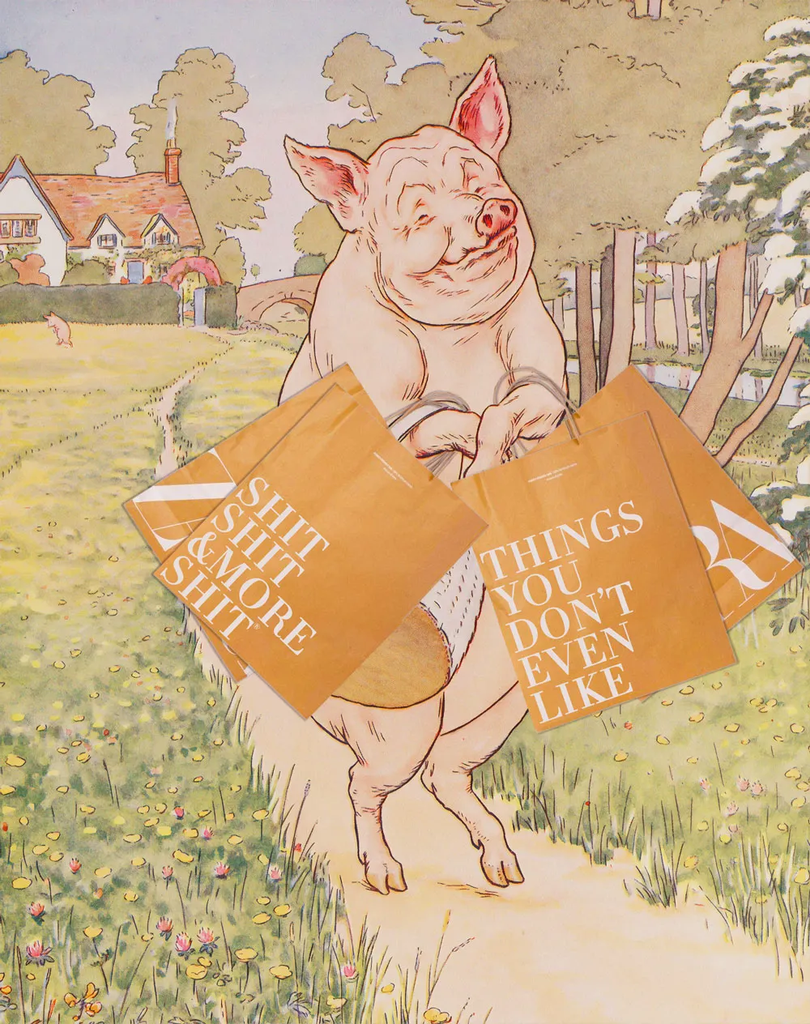
And while we may not all have the means nor the time to consume as much as a fashion influencer like Emma, I’m sure all of us at some point have bought more than we can afford, or more than we need, like buying more than one garment of the same style without realizing we already have something very similar back home… or buying things impulsively only to realize we wasted money on something that didn’t offer the solution we were looking for. You know I could go on and on.
The reality is that for many of us our relationship with fashion is messed up. Not intentionally, but rather as a consequence of years and years of certain conditioning: as girls, we’re led to believe at an early age that we must lead with our physical beauty first. As teenagers, we were often preoccupied with convincing our parents to get us the latest trend, since we were often judged by the things we owned. As adults, we worry about looking outdated, about what our clothes signal to the people around us, about whether we look professional enough, old or young enough, fashionable enough, or, even, slutty enough (which I’m not going to argue with – a little sluttiness is necessary in life).
None of these things are necessarily wrong. I love many of these things as part of how I live my girlhood: keeping up with fashion and trends, figuring out what I want to do with my nails, or what my hair color is going to be whenever I go through my next life crisis. But it can be taken out of proportion when it becomes something that we tie to our own personal value or the value of our relationships (which is what the conditioning is). It can lead to an unhealthy relationship with clothes and, certainly, to the overconsumption that can lead to feelings of disgust and repulsion.
Of course, there has to be a certain allure to shopping, right? Otherwise we wouldn’t be stuck on this cycle that gets us to buy, buy, buy, never be satisfied, yet do it again hoping that it will be different each time. How is it that shopping, the very thing that is promising us satisfaction, is also the very thing that can leave us feeling like something so absurd as a gluttonous pig?
What is the allure of shopping, really?
Right now, I’m arriving at 3 main key points.
The first one (and the obvious one) is that it simply feels good. That dopamine hit that our brains receive can be addictive. And if we have disposable income and an internet connection, then shopping is a very easy way to obtain that high.
The second thing is what I like to call “the cult of me.” I’m not sure that at any other point in history have humans been so acutely aware of their own image and how they’re perceived by the world. Our social media accounts are really just a shrine for ourselves: we mostly post our faces, our lives, our activities. Let me clarify that I don’t think there’s any shame in this. But I do think it enhances our self-awareness in how we want to present ourselves and it can definitely lead to more consumption.
The third thing, which goes hand in hand with the second, has to do with how we relate to each other – which can also be exacerbated by social media. With the rise of micro trends I also think came the rise of enhanced self-categorization. Societal categories used to be more superficial: jock, geek, popular, goth, whatever. Now we have learned to accept that we’re more dimensional than that, and this means that we can fit ourselves in multiple categories at once, and we often try to signal that to others through physical things.
This signaling has always existed, of course, and will continue to exist, but its current state feels like it’s stuck in a consumption loop: buying into a tiktok trend signals that you’re up-to-date with pop culture – the stanley, the drunk elephant, the olaplex – while also signaling that maybe you care about quality and therefore you buy what you’re led to believe is best in the market according to your peers.
Buying into a fashion trend signals that you keep up with fashion because it’s important to you: bag charms, cherry red, the Adidas samba (or lack thereof?) – you signal to other people in your life or online that you’re in on the secret: you know what’s fashionable, you know what to wear.
Then there’s the other end of the spectrum (and this is where I roast myself): you make showcasing your personal style your entire personality. You purposefully don’t buy into trends with the hopes of signaling to others that you are “so cool” and “so unique” that your fashion knowledge is actually way above trends, so you buy things that are personal to you, and that hopefully nobody else has (but the caveat is, of course, that you somehow must let other people know that this is how you operate).
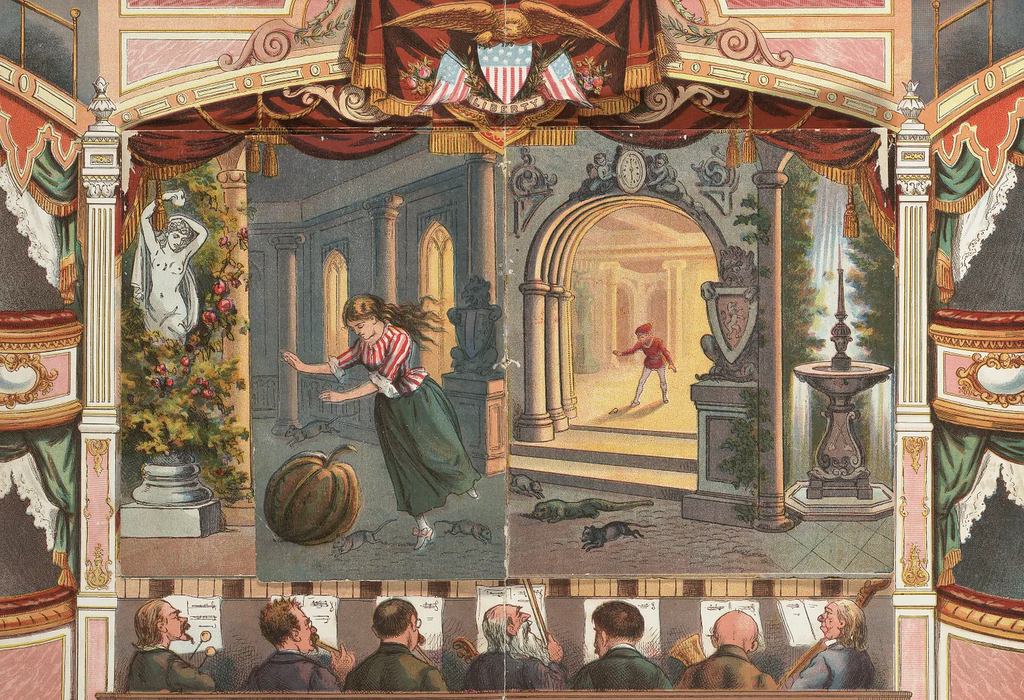
Regardless of *what* you want to signal, consumption is usually at the core of it – shopping is the fairy godmother that takes us to the ball: it makes us feel empowered to beat the odds, bag the prince, rule the kingdom and live happily ever after. But alas, the effect often does wear off after midnight.
So how do we cut that cycle and develop a better relationship with fashion?
First we need to understand what kind of fashion consumer we’d like to be, and how we relate to excess.
There’s a threshold of consumption that takes us from feeling satisfied and content, to feeling excessive and repulsed. We need to understand what that threshold is, and how to avoid going past it.
An easy way to understand this is by considering Elizabeth Cline’s 3 fashion personality types – if you haven’t read any of her books, I highly recommend them for understanding the current state of the fashion industry as well as to heal that brokenness we’ve all experienced with fashion.
Elizabeth describes three types of fashion personalities: the minimalist, the traditionalist, and the style seeker. Essentially, each of these personalities is looking to get something different out of fashion, and they each lie in different parts of the consumption spectrum.
The minimalist wants simplicity, a curated wardrobe and timeless pieces, the smallest consumer out of the 3.
The traditionalist tends to want more novelty than a minimalist, and is a moderate consumer.
Then, there’s the style seeker who’s essentially a fashionista: they crave novelty, are often maximalists and feel the need to express themselves through fashion more than the other two personality types. Out of the three, the style seeker is the largest consumer.
Elizabeth goes on to break down how each style personality can live out their fashion life in a way that is conscious and fair – which is why I recommend reading this book* if you’re looking for more depth than I can offer in this post.
Understanding where you lie in this spectrum is going to be an important first step to set you up in the right direction.
However, of course, changing shopping habits will take more than simply understanding your fashion personality type. You could think, for example, that sure, you’re a minimalist, but you still shop because for some reason you can never find the right thing to wear. Or you could think that you’re a maximalist and wish you could shop more while avoiding guilt.
And here’s what I can say to that:
The simple act of bringing in more consciousness to your shopping habits WILL make them better. You don’t have to have all the answers to your style questions right now, but you can be one step closer to figuring it out by simply slowing down.
And the more you figure yourself out, and the more you heal that relationship with fashion, the more you’ll notice how slowing down is an overarching theme in your journey. In fact, when it comes to my own fashion life, whenever I feel overwhelmed I just close the tab – both literally and metaphorically.
Because the reality is that great fashion is not only about the fashion itself. It’s also about how we move through the world wearing what we do, it’s about the cultural and social aspects behind a visual theme, it’s about living and embodying a certain essence first, and then the clothes follow.
Here’s a list of concrete steps to start the process of cutting the cycle of bad shopping:
A big part of having a good relationship with fashion is simply about thinking. We put compulsion aside in favor of a bit more intellectuality. Whatever desire it is that fashion feeds, I think we can do well by understanding ourselves more.
I love fashion because it has led me to myself, but that wouldn’t have been possible if I hadn’t slowed down first. Give fashion the chance to take you on a journey of joy and self-discovery, and don’t let it bring you down in repulsion.
For the past few years I’ve been playing Stylist with my sister-in-law, Tania. Actually, she has been entertaining my delusions by letting me advise her
Growing up, I was my mother’s greatest test of patience. She often reminds me of how I used to trail behind her, reporting on every